

Sieve analysis is a crucial process in determining the particle size distribution of coarse aggregates used in construction projects.
The IS code for sieve analysis of coarse aggregate is IS 2386.
The Indian Standard (IS) code provides guidelines for conducting sieve analysis to ensure consistent and accurate results.
Importance of Sieve Analysis
Coarse aggregates, such as gravel and crushed stone, play a vital role in the strength, durability, and workability of concrete mixtures.
The particle size distribution of these aggregates directly influences the properties of the concrete.
Sieve analysis helps in determining the grading of the aggregate, which is essential for designing concrete mixes that meet specific requirements.
By conducting sieve analysis according to the IS code, engineers and contractors can ensure that the aggregates used in their projects meet the necessary quality standards.
This, in turn, enhances the overall safety, longevity, and performance of the structures under construction.
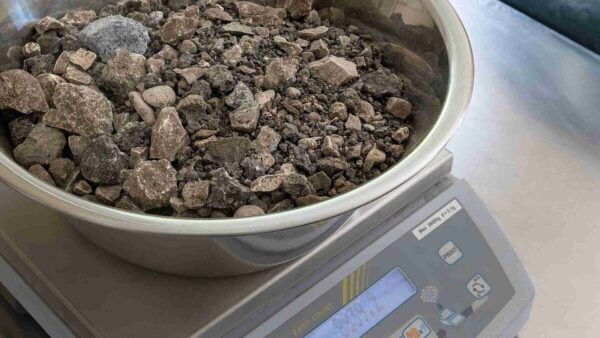
IS Code for Sieve Analysis of coarse aggregate
The Indian Standard code that governs the sieve analysis of coarse aggregate is IS 2386 (Part 1): “1963—’Methods of Test for Aggregates for Concrete: Part 1 Particle Size and Shape.” This code outlines the tools needed, how to prepare samples, the steps to follow during the test, and how to calculate the results for finding out the size distribution
Apparatus Required:
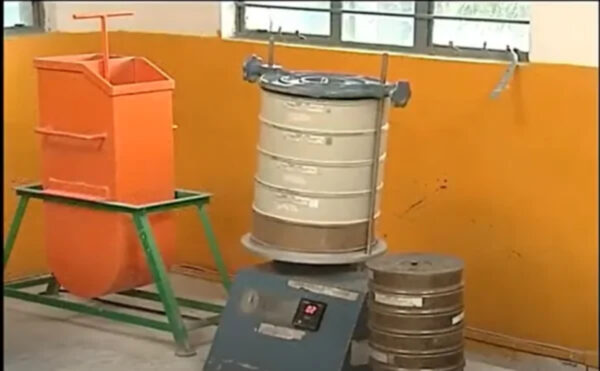
- Test sieves: A set of sieves with square openings of sizes 80 mm, 63 mm, 50 mm, 40 mm, 31.5 mm, 25 mm, 20 mm, 16 mm, 12.5 mm, 10 mm, 6.3 mm, 4.75 mm, and a pan.
- Balance: A balance with an accuracy of 0.1% of the weight of the sample.
- Oven: An oven capable of maintaining a temperature of 110 ± 5°C.
- Mechanical sieve shaker (optional): A mechanical device that facilitates the sieving process.
Sample Preparation:
- Obtain a representative sample of the coarse aggregate in accordance with IS 2430.
- The sample size depends on the nominal maximum size of the aggregate and should be as per Table 1 of IS 2386 (Part 1): 1963.
- Dry the sample in the oven at a temperature of 110 ± 5°C until it reaches a constant weight.
- Allow the sample to cool to room temperature before proceeding with the test.
Test Procedure:
- Arrange the sieves in descending order of size, with the largest sieve at the top and the pan at the bottom.
- Place the dried and cooled aggregate sample on the top sieve and cover it with a lid.
- Agitate the sieves manually or using a mechanical sieve shaker for a sufficient period (usually 5-10 minutes) to ensure complete separation of the particles.
- To the nearest 0.1% of the total sample weight, weigh the amount of aggregate that is still on each sieve and the pan.
Coarse Aggregate Grading Zones (IS 383:2016 Table 2)
Check coarse aggregate grading zones for M20-M40 mixes. Use for 10/20/40 mm nominal sizes. Ensures optimal concrete strength.
| Sieve Size (mm) | Grading Zone 1 | Zone 2 | Zone 3 | Zone 4 |
|---|---|---|---|---|
| 80 | 100 | – | – | – |
| 63 | 95-100 | – | – | – |
| 40 | 35-100 | 95-100 | 100 | 100 |
| 20 | 10-35 | 25-55 | 30-70 | 30-70 |
| 10 | 0-10 | 0-20 | 10-35 | 15-35 |
Single-sized 20 mm example: 95-100% pass 40 mm, 30-70% pass 20 mm. Plot the aggregate gradation curve (semi-log).
Guntur Granite Case (2026): Local crushed granite (Zone 2) passes 20mm sieve 45%, ideal for terrace RCC. Tested per IS 2386.
Sample Lab Report: Sieve Analysis 20mm Coarse Aggregate
Conduct tests in accredited labs. Follow IS 2386 strictly. Record all data.
Sample Details: 25kg Guntur granite, 20mm nominal, 2026 test date. Dry at 110°C.
| Sieve (mm) | Weight Retained (g) | % Retained | Cum % Retained | % Passing |
|---|---|---|---|---|
| 40 | 50 | 2.0 | 2.0 | 98.0 |
| 20 | 1200 | 48.0 | 50.0 | 50.0 |
| 10 | 900 | 36.0 | 86.0 | 14.0 |
| 4.75 | 200 | 8.0 | 94.0 | 6.0 |
| Pan | 150 | 6.0 | 100.0 | 0.0 |
| Total | 2500 | 100.0 | – | – |
FM = (50 + 86 + 94 + 100)/100 + 1 = 3.30. Zone 2 compliant. Plot aggregate gradation curve below.
10mm vs 20mm vs 40mm Sieve Analysis
10mm: Fine for repairs. Sieve stack: 20-10-4.75mm. FM 5.5-7.0. Low water demand.[web:35]
20mm: Standard M20-M40. Stack: 40-20-10-4.75mm. FM 6.5-7.5. Zone 2 ideal.[web:5]
40mm: Mass concrete. Stack: 80-40-20-10mm. FM 7.0-8.0. Check overloading.[web:25]
Use is 2386 sieve sizes list per nominal size. Prevents errors in mix design.
Calculation and Reporting:
- To find the percentage of aggregate that stayed on each sieve, divide the weight that stayed on each sieve by the total sample weight and then multiply by 100.
- Calculate the cumulative percentage retained on each sieve by adding the percentages retained on each sieve and all the sieves above it.
- Calculate the percentage passing each sieve by subtracting the cumulative percentage retained from 100.
- Plot the percentage passing against the sieve sizes on a semi-logarithmic graph to obtain the distribution curve of particle sizes.
- Report the results in a tabular format, including the sieve sizes, weight retained, percentage retained, cumulative percentage retained, and percentage passing.
Interpretation of Results:
The curve showing the distribution of particle sizes obtained from the sieve analysis provides valuable information about the grading of the coarse aggregate.
The IS code for sieve analysis of coarse aggregate outlines the grading rules for various maximum aggregate sizes, which depend on the percentage of material that goes through certain sieves.
For example, for a nominal maximum aggregate size of 20 mm, the IS code specifies the following grading limits:
- 100% passing the 40 mm sieve
- 95-100% passing the 20 mm sieve
- 30-70% passing the 10 mm sieve
- 10-35% passing the 4.75 mm sieve
- 0-5% passing the 2.36 mm sieve
By looking at the sieve analysis results for coarse aggregate and comparing them to the set grading limits, engineers can find out if the coarse aggregate is good enough for quality standards.
If the grading falls outside the specified limits, adjustments may be necessary to ensure the desired performance of the concrete mixture.
What is Sieve Analysis of Coarse Aggregate?
Understanding the particle size distribution of coarse aggregates is crucial for designing concrete mixes that exhibit the desired strength, durability, and workability properties.
The IS code for sieve analysis of coarse aggregate helps improve the mix design, which in turn enhances the quality and performance of the buildings made.
It is essential for professionals in the construction industry to familiarize themselves with the IS code for sieve analysis of coarse aggregate and to implement its provisions in their testing procedures.
By doing so, they can ensure the use of high-quality aggregates that meet the necessary standards, leading to the production of concrete that is both safe and durable.
Common Errors & Troubleshooting in Sieve Analysis
- Moisture: Causes clumping; dry sample at 105°C.
- Overloading: >200 g/sieve; use of the 2386 sieve sizes list limits (e.g., 25 kg for 20 mm).
- Static charge: Brush sieves; wet sieving if fines >5%.
- Poor shaking: 10 min mechanical; check pan residue.
- Non-rep sample: Quarter for uniformity.
Avoid for accurate flakiness index test is 2386 linkage (Part 1).
5 GATE-Style MCQs on Sieve Analysis (w/ Answers)
- Q: Min sample for 20mm aggregate? A: 25 kg (IS 2386).
- Q: FM formula? A: ∑% retained/100 +1.
- Q: Zone 2 at 20 mm sieve? A: 25-55% passing.
- Q: Purpose of the Gradation Curve? A: Visual % passing check.
- Q: Error from wet aggregate? A: Fines are trapped as coarses.
Related Aggregate Tests (IS 2386 Series)
Sieve analysis pairs with shape/size tests. Builds full quality profile.
Flakiness Index Test IS 2386 (Part 1)
Measures thin particles. Limit: <30% for roads.
Procedure: Gauge 200 pieces per fraction. Thickness gauge slots.
Sample: 20mm fraction through 22mm slot. Weigh flaky.
Formula: (Flaky weight / Total) x 100. Guntur granite: 15% typical.[web:33]
Table: Thickness Gauge Slots
| Size (mm) | Slot Width |
|---|---|
| 63-50 | 32.5 |
| 40-22.4 | 14.5 |
| 20-16 | 10.0 |
Specific Gravity & Absorption (IS 2386 Part 3)
SG: 2.6-2.9 for granite. Absorption <2%.
Procedure: Soak 24hr. Weigh SSD (W3), oven dry (W4).
SG = W3 / (W3 – (W1 – W2)). Guntur: SG 2.72.
Sieve Analysis for M20-M40 Mixes
M20 (PCC): Zone 2, FM 6.8. 20mm @50% passing.
M30: Zone 1-2. Tighter gradation for strength.
M40: Continuous grading. Blend 10/20mm.
FM limits: Coarse 6-8.5. Use fineness modulus excel sheet for trials.
Guntur projects: Local granite Zone 2 yields 28MPa M25.
Advanced Precautions & Wet Sieving
Dry sieving standard. Wet if fines >5%.
Wet Procedure: Spray water. Dry residue. Add 10% moisture correction.
Avoid: Overload (Table III IS 2386), static (anti-static spray), non-rep sample (quartering).
2026 Update: Digital shakers mandatory in NABL labs. Calibrate yearly.
Lab Equipment for Sieve Analysis (India 2026)
Essential for accurate tests. Prices from Amazon/Indiamart.
| Equipment | Use | Price (₹) | Affiliate |
|---|---|---|---|
| Sieve Shaker | Mechanical sieving | 22,500 | Buy Now |
| 20mm Sieve Set (8 nos) | is 2386 sieve sizes list | 2,500 | Buy Now |
| Digital Balance (10kg) | Weigh to 0.1g | 3,500 | Buy Now |
| Oven (110°C) | Drying | 15,000 | Buy Now |
Ebook: “Aggregate Testing Mastery 2026” ₹299. Includes Excel templates.
Frequently Asked Questions
What is the IS code for sieve analysis of coarse aggregate?
IS 2386 (Part 1)-1963.
What sieve sizes for 20mm coarse aggregate?
The sieve sizes listed in IS 2386 are 80 mm, 40 mm, 20 mm, 10 mm, and 4.75 mm.
What are coarse aggregate grading zones in IS 383?
The coarse aggregate grading zones in IS 383 correspond to 10/20/40 mm dimensions.
How to calculate fineness modulus?
FM = (∑ cumulative % retained)/100 + 1.
What is the fineness modulus Excel sheet for?
Enter the weights and allow the system to automatically calculate the FM/% passing rate.
What are the common errors in sieve analysis?
Overloading, moisture.
What is an aggregate gradation curve?
% passing vs. log sieve size plot.
Guntur granite aggregate grading?
Typically, Zone 2 is used for local M25 mixes.
Conclusion
Sieve analysis is a fundamental test in assessing the suitability of coarse aggregates for use in concrete construction.
The IS code for sieve analysis of coarse aggregate provides a standardized procedure for conducting sieve analysis, ensuring consistency and reliability in the results.
Engineers and contractors can make smart choices about the types and amounts of aggregates they use in their projects by following the rules in the IS code.
