

A column base acts as a critical transitional element in structural systems, which connects vertical columns to underlying floor slabs and footings.
These important base parts help distribute the heavy weight from the columns over a larger area so that the forces can be passed down into the foundations below.
Both concrete and structural steel buildings utilize various column base designs serving this key purpose through integrated materials working together to provide stability from the ground up.
This guide explains column bases in steel structures, column base design, and base plates for columns in 2026 practice, with practical notes for site engineers and students.
What is a column base?
A column base, also known as a pedestal, is the bottom portion of a column that transfers load into the support below. Column bases sit directly on top of the building foundations and anchor the column.
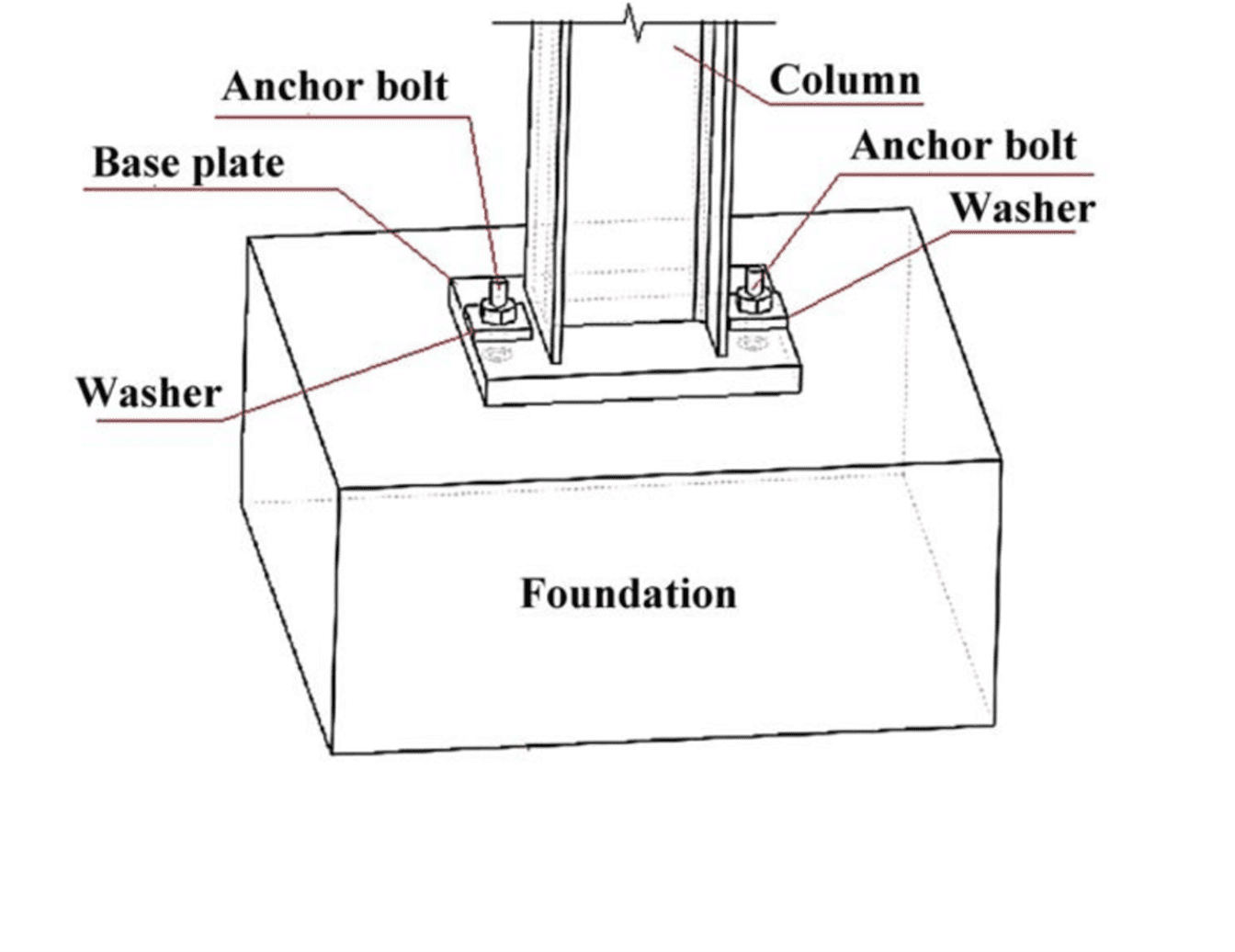
Purpose of a Column Base
The main purpose of a column base is to evenly distribute concentrated column loads into the footing below without exceeding the bearing capacity of soil.
Column bases help expand the loaded surface area for better dispersion.
Column bases also provide a mounting point to securely anchor columns above. This transfer of forces resists vertical gravity loads as well as lateral loads from wind or seismic activity.
Types of Column Bases in Steel Structures (Slab Base and Gusseted Base)
Types of Column Bases in Buildings
Here are the most common types of column bases used in construction:
Slab Base
A slab base consists of a concrete slab that is thicker than the floor slab. The column sits directly on top of this thickened slab area, which helps spread out the load over a larger area. Slab bases are a relatively simple option suitable for lighter loads.
Bracket or Corbel Base
A bracket or corbel base uses a concrete haunch or steel bracket underneath the column to provide support. The transverse beams, walls, or slabs will bear some of the column’s load. This arrangement allows for larger column loads than a simple slab base could handle.
Pedestal Base
A concrete pedestal base is essentially a large block cast at the base of the column. This enlarged base helps distribute axial and lateral loads while also raising the column higher off the foundation. Pedestal bases are commonly used in modern construction for their load-bearing capabilities.
Steel Base Plate
Steel base plates consist of an anchored steel plate installed beneath steel columns to transfer load into the concrete foundations. The base plate expands the bearing area and provides a way to secure the column. Grouting beneath the plate is best practice.
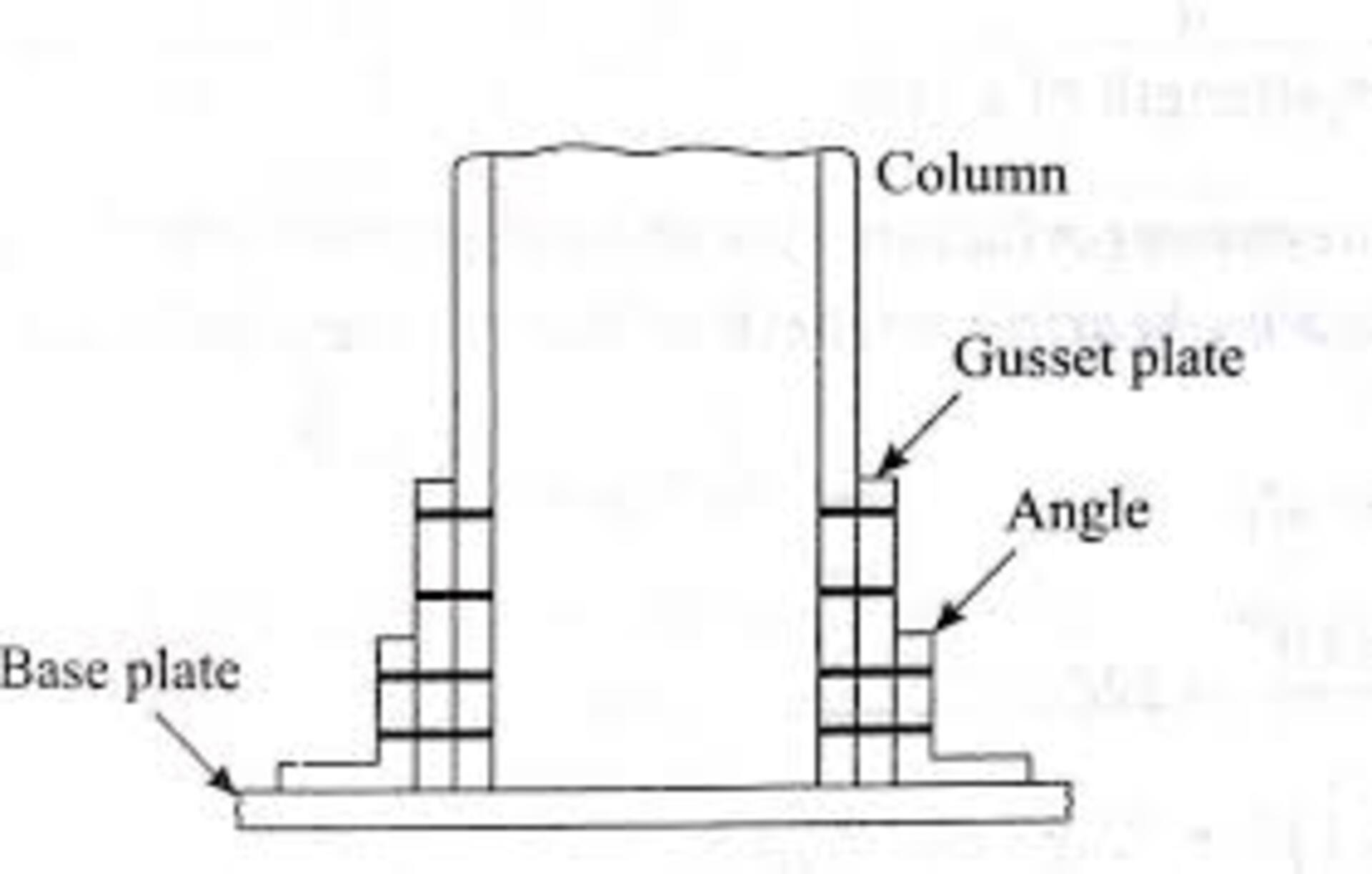
These options allow engineers flexibility in designing bases suited to the column type, loads, foundation, and construction methods used in a building project. The right base choice ensures stability.
Reinforced Concrete Column Bases
For concrete columns, reinforced concrete bases are commonly used. Here, steel rebar cages tie the concrete column into the pedestal base using overlapping vertical rebar layouts with cross-bracing ties.
Concrete bases often flare out at the bottom, creating widened shear keys to increase bearing area into footings below for stability.
Structural Steel Column Base Plates
With structural steel columns, welded base plates atop concrete foundations are common. Anchor bolts embedded in concrete stick up to attach steel plates below columns.
The enlarged base plates bond and transfer forces into concrete while also raising columns above grade. Grouting beneath plates is best practice.
For heavy loads on isolated footings, column bases work together with spread footings and foundation design to keep soil bearing pressures within safe limits.
Where steel frames meet shear walls or core walls, it is important to coordinate column base levels with shear wall detailing and concrete bearing and soil bearing capacity checks.
Square Concrete Column Bases
Square column shapes allow the easiest forming when poured atop square pad foundations. Two-part forms build up concrete bases with steel embeds. “Octagonal” is also used.
For seismic areas, rectangular shear walls often utilize concrete columns atop spread footings with integrated pedestal bases.
| Type of Column Base | Brief Description | Typical Load Range | Key Components | Reference Code |
|---|---|---|---|---|
| Slab base | A slab base is a basic steel column base that rests on concrete, dispersing the load from the base into the footing. | The slab base is designed to support light to medium axial loads with small bending moments. | The base plate is supported by anchor bolts, a grout layer, and a concrete pedestal or footing. | IS 800:2007 – Clause on slab base design. |
| Gusseted base | A gusseted base uses gusset plates and stiffeners so the slab base and gusseted base assembly can safely carry heavy column loads without an excessively thick plate. | Medium to heavy axial loads and significant bending moments. | Base plate, gusset plates, stiffeners, anchor bolts, welds, or rivets. | IS 800:2007—Moment‑resisting column bases. |
| Pocket-based | The column base and end plate are embedded in concrete inside a pocket to transfer load by bearing and shear along the embedded length. | Columns on deep foundations, piles, or wells where spread footing is not used. | End plate, shear connectors, concrete pocket, surrounding footing. | IS 800:2007 – Pocket base details (informative). |
| Grillage foundation | A steel grillage below the steel column base is used where soil bearing capacity is low and the foundation area must be greatly increased. | The foundation is designed to support very heavy column loads on weak soil. | The structure consists of a base plate, upper and lower tier beams, and concrete encasing. | IS 800:2007—Grillage beams and foundations. |
Spreading Column Base Foundations
Spread foundations refer to wide, thick concrete slabs or pad footings. These provide greater bearing surface area for heavy building loads to spread across soil without exceeding capacity.
Spread footings better resist uneven settling while also providing space for bases that expand the loading areas of columns.
Column and Base Details
Here are some key details about the column and base connections in structural systems:
- The base of a column serves to transfer forces down into the foundation while also elevating and anchoring the column. This critical interface aims to create as smooth and efficient a load path as possible.
- For concrete columns, the steel rebar typically protrudes slightly from the bottom of the column into the concrete pedestal base. This allows continuity in the tension-resisting rebar “cage.”
- The protruding rebar will tie into a cage of reinforcing bars within the base that flare outward to provide added shear resistance.
- Structural steel columns similarly must tie securely into their base plates atop concrete foundations.
- Anchor bolts embedded in the concrete raise up to connect to the base plate welded beneath the steel column. A tight connection avoids separation, bending, or uneven loading under strain.
- Grouting beneath steel base plates is considered best practice to ward off uneven settlement while also enhancing load distribution capabilities. This strengthens the overall connection.
- For timber columns, the connection detail involves notching the end of the column to sit on a pedestal base or metal bracket. Bolts or proprietary anchors then secure the column firmly into its base.
In all column bases, the design is meant to distribute forces over a larger area while ensuring that the vertical support parts stay stable against tipping or sideways forces that could pull the column away from its foundation.
Column Base Plate Design Calculations
The design process for a steel column base generally follows these steps.
Step 1—Determine design loads
Calculate the factored axial load, shear, and bending moment at the base of the column from the structural analysis. Include dead load, live load, wind, or seismic actions as per the governing combination.
Step 2—Select the base plate size based on the concrete bearing.
Choose a trial size for the base plate so that the bearing pressure on concrete remains within allowable limits. Use the factored load divided by the effective bearing area and check against permissible bearing stress from IS 456 and IS 800:2007.
Step 3 – Check base plate thickness
Check the projection of the plate beyond the column face in each direction and design it as a cantilever strip under uniform bearing pressure. Use the relevant clause of IS 800:2007 to compute the required plate thickness based on bending strength.
Step 4—Design anchor bolts
Design the anchor bolts for uplift, shear, and combined actions, considering bolt diameter, embedment length, and layout. The anchor bolts must safely transfer tension and shear from the base plate to the concrete pedestal or footing.
Step 5 – Design welds and column‑to‑base joint
Check welds or bolted connections between the steel column and the base plate so they can transmit the factored forces and moments. Weld size and length should satisfy the design strength requirements and follow the detailing rules in IS 800:2007.
This calculation process for the column base plate follows IS 800:2007 and IS 456 for bearing checks.
Column Base Plate Calculation Example (IS 800:2007)
Consider a steel column carrying a factored axial load of 750 kN resting on a concrete pedestal with an allowable bearing stress of 4 MPa. The aim of this example is to illustrate the fundamental steps for calculating a column base plate without going into full code-level detail.
First, the required bearing area is obtained by dividing the factored load by the allowable bearing stress. For 750 kN and 4 MPa, a plate area of about 190,000 mm² is needed, so a trial base plate of 320 mm × 600 mm can be adopted. The projection of the plate beyond the column flanges is then checked in each direction.
Next, the bearing pressure under the plate is calculated, and the plate is designed as a cantilever strip projecting beyond the column. Using the adjusted bearing pressure and how far the plate sticks out, we find out how thick the plate needs to be based on the bending strength limits in IS 800:2007 Finally, suitable anchor bolts and welds are selected to resist uplift and shear and to complete the column base design.
For a full step‑by‑step solution with formulas and code references, you can use our column base plate calculation spreadsheet when it becomes available.
Column Base Fixing Details
Top mounting details for column bases vary by type:
- Concrete columns use rebar splices embedded into pedestals.
- Steel columns are bolted or welded to base plates below.
- Timber columns notch into pedestals or use connecting brackets.
Bottom shear fixing transfers tension loads into the footing foundations.
Column-to-Base Anchoring Methods
Here are some of the key methods used to anchor columns to their bases:
Reinforced Concrete Columns
- Vertical rebar dowels extend down from the bottom of concrete columns into the concrete pedestal base. Hooked rebar laps over this continuing rebar cage. This mechanism ties the column into the base.
- Headed anchors may also embed within concrete columns to then bolt into pedestal bases for exceptional tension load resistance in high seismic zones.
Structural Steel Columns
- Concrete anchor bolts stick up from poured footings and pier caps. Base plates connected under steel columns have holes to lower onto these bolts and get affixed with washers and nuts.
- Anchor rods are also frequently cast or epoxied into existing concrete to then bolt base plates of retrofitted steel columns atop older foundations.
Timber Columns
- Notching at timber column ends allows bearing atop pedestals. Through-bolts secure into brackets.
- Embedded steel connectors and proprietary ties are also common in sophisticated timber joinery with side brackets, knee braces, and shear plates.
In all materials, the goal of anchoring is to prevent upward and sideways forces from pulling columns away from their base connections, which helps maintain building stability through strong foundations.
Further study: For more worked examples on steel column base design and exam‑oriented problems, check out our notes on moment‑resisting column bases and grillage foundations.
5 FAQs About Column Base
What is a column base in construction?
A column base is the structural element that connects a vertical column to the foundation, typically a concrete footing or pile cap. Its main role is to transfer loads—including axial forces, bending moments, and shear—from the column safely into the building’s foundation. For ready-to-use templates for column base design, check our design toolkit for Indian codes.
What are the main types of column bases?
The main types of column bases are slab base, gusseted base, pocket base, and grillage foundation. In designing steel column bases, slab bases and gusseted bases are the most common details used in building and industrial projects.
Why is the column base important for building safety?
Column bases evenly distribute concentrated column loads across a larger foundation area, reducing the risk of settlement or foundation failure. They provide structural stability by serving as a critical transition point for vertical and lateral forces, helping prevent misalignment or collapse.
Which factors influence the design of a column base?
Key factors include the types of loads transmitted (axial, shear, moment), column and foundation material properties, base plate geometry, anchorage methods, and expected environmental conditions (like corrosion or seismic forces). Proper design ensures secure load transfer and building.
How often should column bases be inspected, and what are the risks of poor design?
Regular inspections—quarterly visual checks and annual nondestructive testing—are recommended to ensure integrity. Poorly designed or maintained column bases can lead to reduced performance, foundation damage, or structural failure, potentially causing instability or collapse of the building.
Why is a base plate provided under a steel column?
A base plate is provided under a steel column to spread the load from the column to a larger concrete bearing area and to give a flat, level seating for erection. In column base design, the base plate also allows anchor bolts and grout to be detailed so that the steel column base can safely resist axial load, bending, and shear.
What is the difference between a slab base and a gusseted base?
A slab base uses a single flat base plate directly under the column, while a gusseted base adds gusset plates and stiffeners to reduce plate thickness and carry higher loads. Slab bases and gusseted bases are both used in designing steel column bases, but gusseted bases are preferred when loads and bending moments are large and a simple plate would become uneconomical.
How is the load transferred from the column to the foundation in the column base design?
In column base design, load is transferred from the column to the foundation by bearing through the base plate into the concrete pedestal or footing and by anchor bolts and reinforcement where tension or shear is present. The steel base plate for the column spreads the compression, while bolts and welds connect the column, base plate, and concrete so that axial load, shear, and moment all reach the foundation safely.
What is the purpose of a column base?
The purpose of a column base is to safely transfer the concentrated load from the column to the concrete pedestal or footing without exceeding the soil-bearing capacity. A properly detailed steel column base also anchors the column against uplift and lateral forces and forms a reliable interface for safe column base design.
How is a column base plate designed?
A column base plate is designed by taking the factored load at the base, selecting a plate size so that concrete bearing is within limits, and then performing checks for the plate thickness, anchor bolts, and welds as per IS 800:2007 and IS 456.
Column Base Design Tools
Save time on IS 800:2007 column base plate calculation with our ready‑to‑use spreadsheet and templates for steel column base design to Indian codes. Get the toolkit for column base design.
Conclusion
Properly designed column bases are essential for structural integrity. They anchor building columns while safely transferring concentrated forces into expanded footings below grade.
Understanding base types and quality construction remains vital for stable columns.
A practicing structural engineer with extensive experience in designing steel column bases for both industrial and building projects penned this article.
