• Understanding Hooke’s Law and Its Engineering Applications

    Understanding Hooke’s Law and Its Engineering Applications

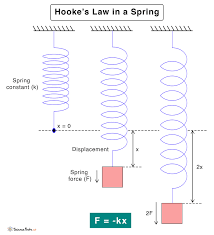
    Hooke’s law is a principle in physics that states that the force needed to extend or compress a spring is proportional to the extension or compression of the spring from its resting position. This law has several important applications in engineering, especially civil and mechanical engineering. This linear relationship between force and displacement holds only…
  • Value of Principal Stresses in Structural Engineering

    Value of Principal Stresses in Structural Engineering

    Stress analysis forms a critical foundation of structural design across civil, mechanical and aerospace engineering disciplines. Determining the state of stress on structural components enables predicting failure and fracture risks. When any structural component experiences complex multi-axial loading scenarios, the stress state at a given point must be simplified into principal directions to enable accurate…

  • Injection Grouting – Factors effecting it, Uses, Pros and Cons

    Injection Grouting – Factors effecting it, Uses, Pros and Cons

    The process of injection grouting, also referred to as permeation grouting or chemical grouting. It entails injecting a low-pressure flow of grout into the pores, honeycombs, or cracks in concrete or masonry structural members. In order to seal those cracks and strengthen the frayed or damaged concrete or masonry structural members. The grout is typically…

  • Grouting Meaning – Definition | Characteristics | Types

    Grouting Meaning – Definition | Characteristics | Types

    Grout meaning is the process of injecting a fluid material into cracks, voids and fissures to fill them. It is a thin mortar used to seal joints between tiles, masonry units or rock constructions. Grouted meaning the past tense of grouting, referring to something that has undergone the grouting process. Grouting Works Grouting is a…

  • What are Spillways for Dams ? Why are they Required ?

    What are Spillways for Dams ? Why are they Required ?

    Spillways are generally provided to allow the surplus discharge, during floods and other unexpected conditions,  from the upstream side of the reservoir to the downstream. This is nothing but the overflow portion of the dam. It is also called by the name “surplussing work“. According to Wikipedia, A spillway is a structure used to provide the controlled…

End of content

End of content