• Composite Material Matrix – Types of Composites | Fiber Composite | Uses

    Composite Material Matrix – Types of Composites | Fiber Composite | Uses

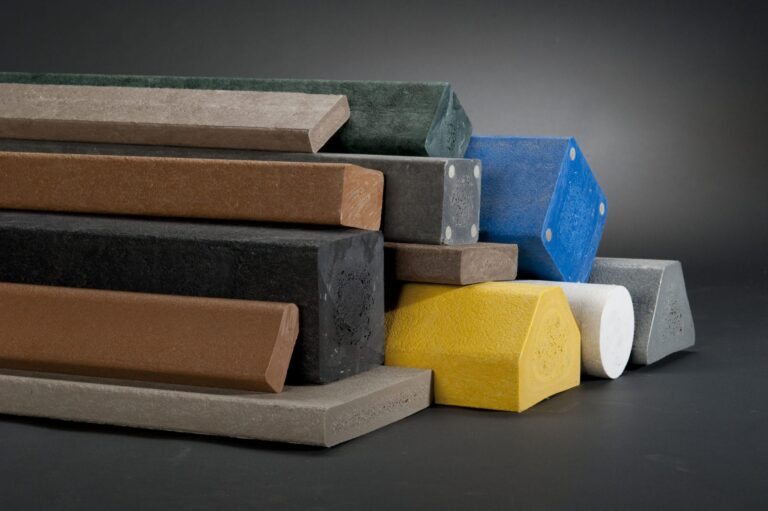
    Composite materials have played a predominant role throughout human lives. From early civilization to enabling future innovations. A composite is a material obtained by amalgamation of two or more distinct materials to achieve a material with enhanced properties compared to the parent materials. These two or more different materials are quite dissimilar  in toughness, compression…
  • Column Failure and its Different Types

    Column Failure and its Different Types

    Column is a very important structural component that boosts the structural integrity . It transfers the load from the structure to the ground through foundation. The entire stability of structure lies on how perfect the column is designed and constructed. When designing structures, understanding column failure is crucial to ensure the safety and stability of…

  • Alternatives to Aggregates for Cheap and Better Concrete

    Alternatives to Aggregates for Cheap and Better Concrete

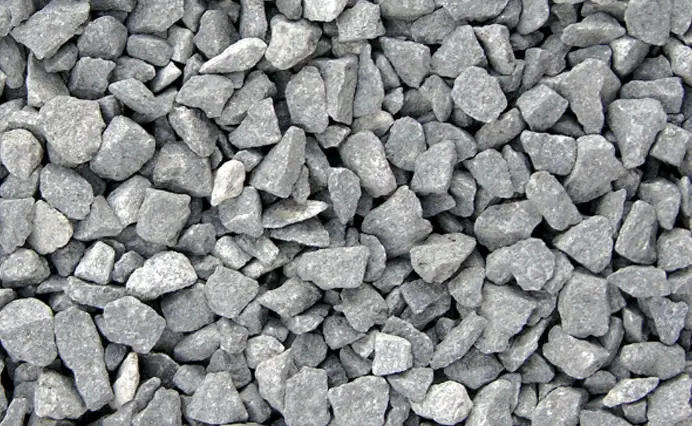
    Traditional aggregates can be replaced by a number of other materials while making concrete. Aggregates are one of the main components of concrete, which is the most widely used construction material in the world. However, the extraction and consumption of natural aggregates, such as river sand and gravel, have negative impacts on the environment and…

  • Why Are Aggregates Used In Concrete?

    Why Are Aggregates Used In Concrete?

    Aggregates are used in concrete for several reasons. First, they reduce the amount of cement and water required to make the concrete mixture. This lowers the cost and environmental impact of concrete production. Second, they improve the strength and durability of concrete by resisting compression and preventing cracking. Third, they enhance the workability and appearance…

  • Importance of Aggregates

    Importance of Aggregates

    Aggregates also provide strength, durability, stability and resistance to various environmental factors. However, not all aggregates are suitable for every purpose. Some aggregates may have defects or impurities that can affect their performance and quality. Therefore, it is important to test aggregates before using them in construction projects. Testing aggregates can help to determine their…

  • Aggregates used in Concrete

    Aggregates used in Concrete

    Before getting straight to the topic, let’s have a small discussion regarding aggregates. Did you ever wonder, why aggregates are typically used in construction and engineering projects? Have you asked yourself why is it necessary to use aggregates and what is their importance? What happens if at all aggregates are not available in a particular…

  • Complete Design of RCC Column using IS:456-2000 with Example

    Complete Design of RCC Column using IS:456-2000 with Example

    RCC stands for reinforced cement concrete, which means that concrete is reinforced with steel bars to increase its strength and durability. Concrete is strong in compression while a minimum longitudinal reinforcement is provided in the column to assist tensile stress. Column is an important component of RC structure. It may be defined as a member…

  • 7 Different Types of Tests on Aggregates (Coarse)

    7 Different Types of Tests on Aggregates (Coarse)

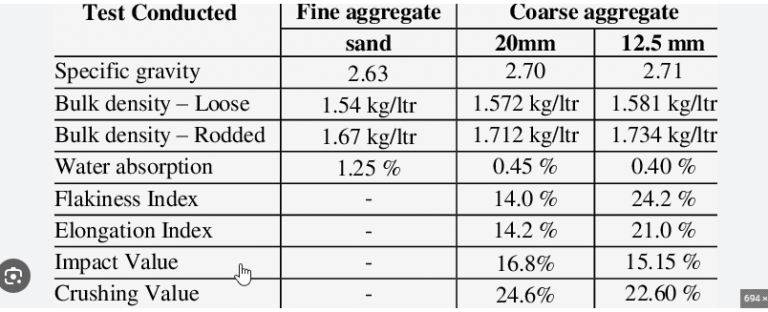
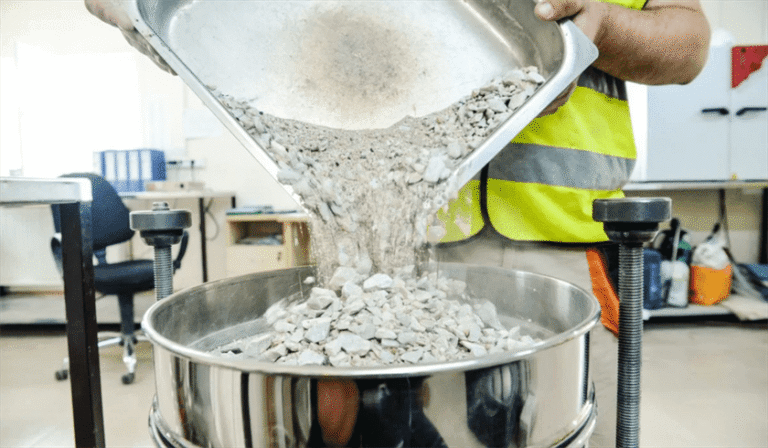
    Tests on aggregates ensure quality in civil engineering projects like concrete and roads. Aggregate testing in civil engineering covers physical and mechanical properties of aggregates, durability tests on aggregates, and more. This 2026 guide classifies tests, details procedures, limits, and selection tips per IS 2386 aggregate test methods. Essential for students and practitioners selecting road…

End of content

End of content