
• Civil Engineering Blocks for construction – 3 Types

    Blocks for construction works form the foundation of countless structures and buildings around the world. Whether using traditional materials like concrete or stone, or more contemporary options such as glass blocks or interlocking brick systems, blocks provide versatility, ease of use, and economic advantages for all types of building projects. Selecting appropriate blocks for a…

  • Steel Tensile Test for Structural Performance

    Steel tensile test provides key data on strength, ductility, and additional mechanical properties for structural design and quality control. Steel is one of the most widely used construction materials in buildings, vehicles, infrastructure, and machinery due to its immense strength and durability properties. Steel exhibits immense strength thanks to advanced production methods. However, validating mechanical…

  • Exploring Spider Cracks in Concrete Slabs

    Exploring Spider Cracks in Concrete Slabs

    Spider cracks in concrete can look harmless at first glance, but they actually undermine structural integrity if left unchecked. Concrete is one of the most durable and versatile construction materials, used in everything from sidewalks to skyscrapers. However, after years of use and exposure to the elements, cracks can develop in concrete structures. One of…

  • 7 Factors Affecting Concrete Durability

    7 Factors Affecting Concrete Durability

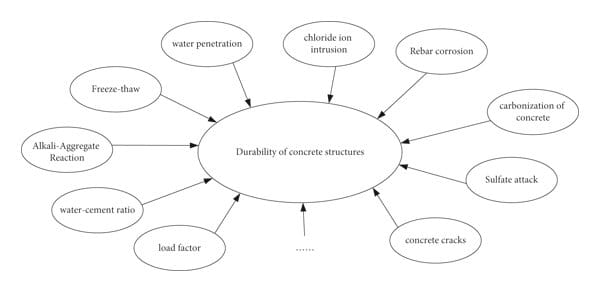
    Concrete durability determines infrastructure lifespan. Durability of concrete may be defined as the ability of concrete to resist weathering action, chemical attack, and abrasion while maintaining its desired engineering properties. Different concretes require different degrees of durability depending on the exposure environment and properties desired. For the longest-standing concrete medieval structures still dotting parts of Europe…

  • 5 Types of Deep Foundations and Design

    Skyscrapers towering hundreds of stories high. Bridges spanning miles across bodies of water. Highways traversing unstable terrain. What do these impressive feats of engineering have in common? Their stability and shear capacity rely on deep foundation systems securing them firmly in place below ground. When substantial structures can’t depend merely on traditional, shallow footings to…

  • Details about Civil Engineering 3d Structural Engineering Software

    The use of 3D structural design software is transforming the construction industry. These powerful programs allow civil and structural engineers to design and analyze complex projects with a level of detail and precision never before possible. According to industry research, over 75% of engineering firms now utilize 3D structural design software on some level. The…

  • 10 Essences of Ultimate Tensile Strength

    10 Essences of Ultimate Tensile Strength

    Ultimate tensile strength (UTS) is a measure of the maximum stress before fracture. Critical to structural design safety. Engineers use UTS to calculate safety factors for beams, columns, and cables. In civil projects, material selection is guided by their tensile properties. Critical for structural design safety. Tensile properties of materials guide material selection in civil projects. UTS…

  • 6 Key Factors Influencing Tensile Strength

    6 Key Factors Influencing Tensile Strength

    Tensile strength defines a material’s resistance to forces pulling it apart. When designing load-bearing structures and components like bridges, pressure vessels, and dynamic machines, understanding the tensile strength of materials is imperative. It defines the maximum stress or pulling force per unit area that a solid can withstand axially before fracturing. It quantifies axial resistance…

  • Understanding Shear Strain in Materials

    Shear strain is a crucial mechanical parameter that every engineer must understand in order to properly analyze deformations in materials and structures. It is an important concept in materials science and structural engineering. It refers to the geometrical distortion that occurs when applied forces cause internal shear stresses within an object. Specifically, it quantifies angular…

End of content

End of content