• Evaluating Maximum Shear Stress for Safe Design

    Evaluating Maximum Shear Stress for Safe Design

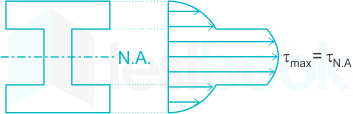
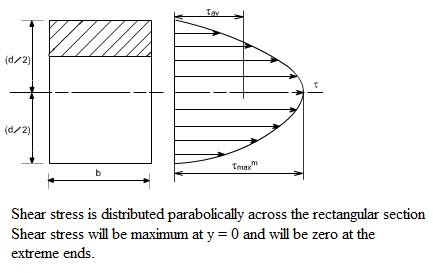
    Maximum shear stress is a critical concept in structural design and analysis that every civil engineer must understand. When forces act on an object, they induce internal stresses—normal stresses, shear stresses, and occasionally combined states of stress. Shear stress refers to stresses induced perpendicular to an applied load, causing adjacent parts of a material to…

  • Grade beam vs Tie Beam – 6 Key Differences

    Grade beam vs Tie Beam – 6 Key Differences

    When designing the structural foundation for a residential or commercial building project, engineers must make key decisions about the supporting concrete beams. Two beam types often confused are grade beams and tie beams. However, each performs very different structural functions in managing loads and stabilizing the building against lateral earth and wind pressures. Understanding the…

  • 7 Reasons why Aluminum Density Drives Modern Light weighting Advancements

    Aluminum density underlies widespread structural applications from aerospace to automobiles. Density profoundly influences material selection across structural design domains, from towering skyscrapers to graceful aircraft. By mass, aluminum exhibits roughly one third the density of steel and 90% lower density than copper while maintaining coveted mechanical properties, especially strength-to-weight ratios. This facilitates substantial weight reductions…

  • Why Modulus of Resilience Metrics Matter for Material Performance

    Why Modulus of Resilience Metrics Matter for Material Performance

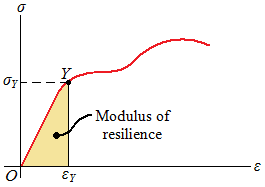
    Modulus of resilience has emerged as a defining mandate for infrastructure development in the 21st century as environments grow increasingly prone to dynamic, extreme loading scenarios. While strength provides the absolute basis enabling structures to resist failure, resilience allows recovery in the face of sporadic overloads. The modulus of resilience denotes the capability of a…

  • Elastic Materials-properties, Types, & Applications

    Elastic Materials-properties, Types, & Applications

    Elastic materials are substances that can stretch or deform when a force is applied, but then return to their original shape once the force is removed. These materials have the useful property of elasticity, which enables them to undergo reversible deformation. Some common examples of elastic materials include rubber bands, bungee cords, stretchy fabrics like…

  • Beam Clamps – The Structural Engineer’s Secret Weapon

    Beam Clamps – The Structural Engineer’s Secret Weapon

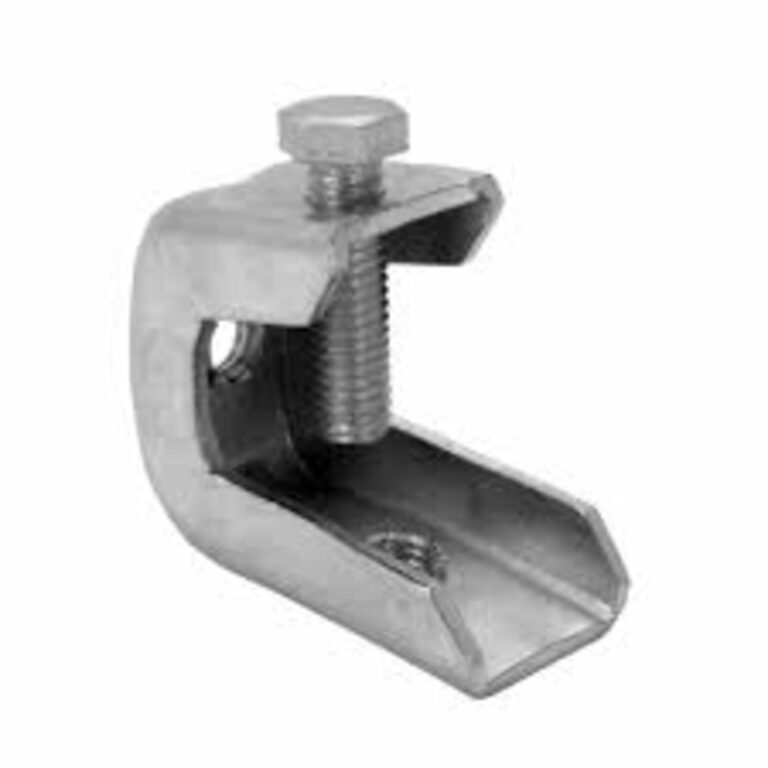
    Adjustable metal brackets designed to securely join, fasten or provide support connections for horizontal beams in construction projects and structural engineering applications. They utilize sturdy, bolted joints to create reinforced stability points. Made from galvanized or stainless steel, beam clamps wrap around or attach to beams with indented gripping surfaces and shear resistance strength to…

  • The Versatility and Power of Beam Straps in Construction

    The Versatility and Power of Beam Straps in Construction

    Metal fixtures used to join, hang or support horizontal beams in construction projects. They are sturdy brackets made of galvanized steel or stainless steel that wrap around or clamp to beams to provide reinforced stability and weight-bearing capacity. Beam straps offer an alternative to traditional fasteners like bolts or welds for securing beams. They allow…

  • Characteristics of Bituminous Concrete Pavement

    Characteristics of Bituminous Concrete Pavement

    Bituminous concrete pavement is the most common flexible pavement used on highways and city roads. It gives a smooth, black riding surface with excellent skid resistance. When the layers, mix design, and construction steps are correct, the road can perform well for many years. This guide explains layers, mix design, construction, failures, and maintenance in…

  • 3 Concrete Ways of Stress Calculations for Beams

    3 Concrete Ways of Stress Calculations for Beams

    Stress calculations for Beams constitutes a central aspect within structural design across civil engineering. By computing induced stresses, engineers confirm beam components withstand applied loads without failure. Among principle stresses induced in beams under bending loads, designing for maximum normal stresses on extreme fibers proves most critical. However, properly determining shear stresses also proves necessary…

End of content

End of content