

Curb and gutter systems are vital infrastructure elements that line the edges of roadways and provide critical storm water management functions.
In civil engineering, they play a crucial role in managing water runoff along roads. A curb is a vertical barrier that runs parallel to the road, while the gutter is a shallow channel designed to collect and redirect water away from the road surface.
Have you ever seen rainwater collect outside your gate or office entrance? Most of the time, the problem is a road gutter that was built badly or is blocked. I’ve walked many sites where the road looked fine. But the edge was cracked, the curb had sunk, and the water had nowhere to go.
A road gutter is a small part of the road. Yet it decides how long the pavement lasts and how safe the street stays in the rain. When it fails, water seeps into the base, potholes form, and walkways flood.
The primary purpose is to prevent water from infiltrating the pavement structure, which can lead to damage and reduced lifespan of the road.
Gutters in road design come in various shapes and sizes, depending on the specific requirements of the project. Some common types of curb and gutter include barrier curbs, mountable curbs, and combination curbs.
Barrier curbs are designed to prevent vehicles from leaving the road, while mountable curbs allow vehicles to cross over them when necessary. Combination curbs incorporate features of both barrier and mountable curbs.
This article explains what purpose curbs and gutters serve, different design types, proper construction with rebar reinforcement, ADA compliance, drainage system integration, replacement scenarios, aesthetic options like stamped concrete, and considerations like cost per linear foot.
What Is Gutter in Road?
A road gutter is a shallow channel built along the edge of a road, usually next to the curb. It collects rainwater from the road surface and carries it to inlets, drains, or outfalls. It protects the pavement from water damage, prevents ponding, and keeps traffic lanes and sidewalks safe during rain.
What is a Curb?
A curb refers to a vertical or sloping concrete or asphalt structure installed along the edge of roadways functioning as a barrier between vehicle traffic and pedestrian spaces.
Curbs frame travel lanes, provide drainage control, and strengthen pavement edges against cracking and subsidence. They establish an unambiguous boundary assisting navigation.
What is a Gutter?
Gutters describe the shallow concrete troughs built integrally along curbs to capture and channel storm water runoff from pavement and adjacent areas into dedicated drainage systems.
The recessed linear depressions convey flows while preventing overflow erosion hazards.

What is the Purpose of Curb and Gutter?
Key reasons civil engineers specify curb and gutter systems include:
Drainage Control: Defines edge of roadway for controlled stormwater capture preventing random erosion and flooding of surrounds.
Traffic Guidance: Provides clear boundary between vehicle lanes and pedestrian zones – keeps cars on carriageways.
Safety Barrier: Redirects vehicles back onto roadway upon unintended departure, especially around curves.
Pavement Edge Support: Reinforces outer pavement lip against cracking/crumbling thus extending service life.
Access Demarcation: Highlights and access openings through vertical upstand curbing – especially important at intersections.
System Integration: Links collective drainage infrastructure – transitions flows into area inlets and underground pipes.
Aesthetics Accent: Visually defines public roads and spaces over random terrain for an orderly appearance.
Overall, curbs and gutters deliver vital road infrastructure functionality in an integrated, systematic manner.
Types of Curbs
Common curb types used in various applications are:
Barrier Curbs: Nearly vertical-faced curbs up to 6 inches tall that establish definitive pavement boundaries. Preferred for high-speed roads and traffic regulation.
Mountable Curbs: Sloped curbs allowing vehicles to deliberately drive over when required while still controlling general access. Used on lower speed commercial roads.
Rollover Curbs: Shallow sloped or nearly flat curbs which allow easy crossover under typical traffic but demarcate edges. Seen on rural roads and large commercial complexes.
Shoulder Curbs: Provide moderate delineation between road shoulders and abutting non-paved areas like planter strips for selective access.
Water Channels: Shaped drainage channels directing runoff flows into receptacles. Used in conjunction with other curb types which lack integral gutters.
Selection depends on road type, desired access control levels, integration needs with other infrastructure, and drainage requirements.
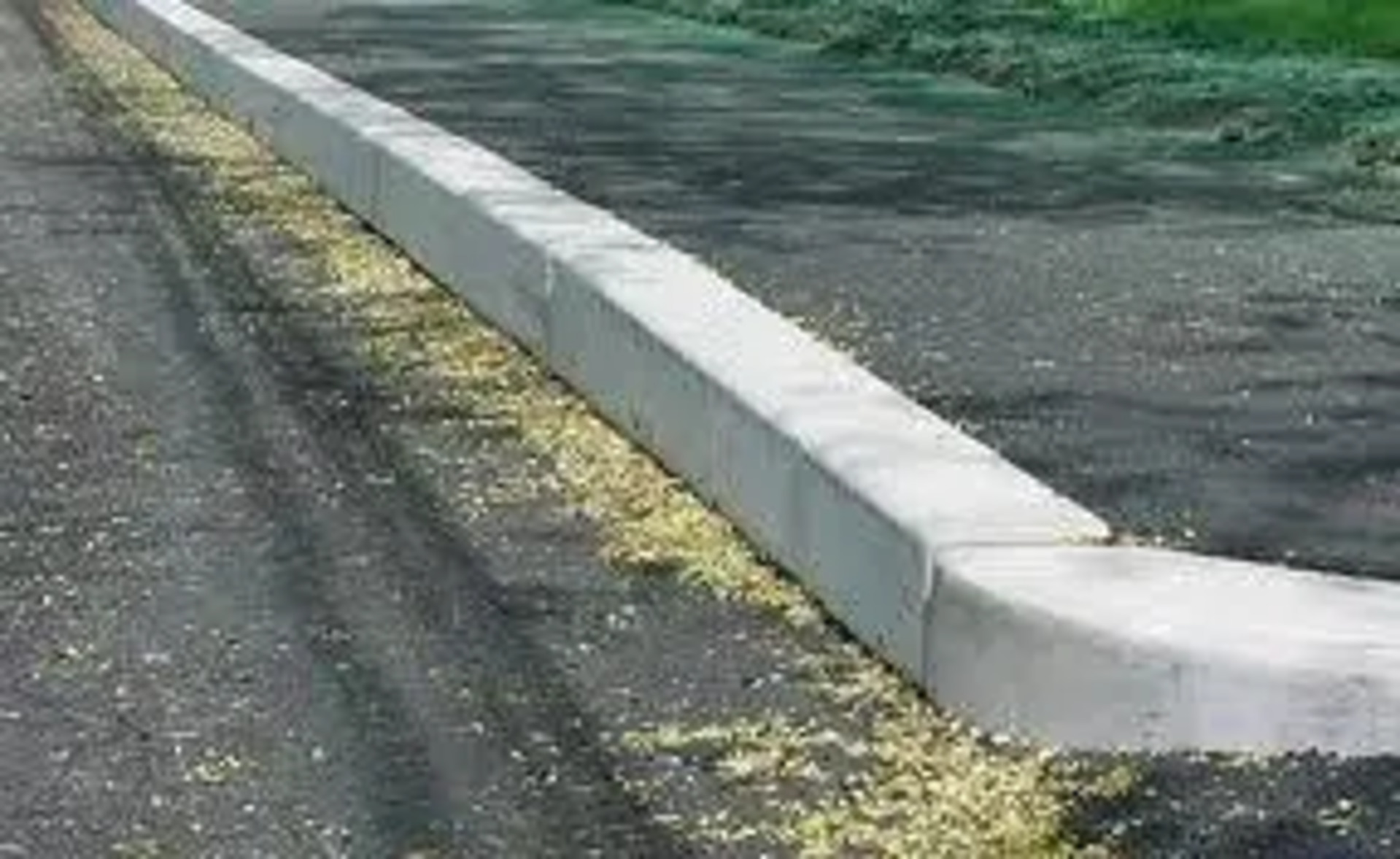
Barrier type
Concrete Curb and Gutter Construction
Concrete is the most common material for curbs and gutters owing to low cost, high durability and shape versatility:
Formwork: Forms for slipping concrete into accurate shapes. Rigid vertical forms for curbs; horizontal forms shaped for gutter troughs.
Reinforcing: Steel rebar grids reinforce the concrete structurally against cracking and damage. Thicker sections at vulnerable points like curb returns and drainage openings.
Concrete Placement: Concrete poured and finished to specified dimensions following standard codes and procedures. Small volume batches allow customization.
Jointing: Control joints cut to regulate crack development. Isolation joints demarcate sections needing independent movement.
Finishing: Exposed surfaces smoothed with floats and brooms/combs for optimal drainage flow and to remove marks left by forms.
Curing: New concrete protected to promote even and complete hydration for optimal strength.
Maintaining standards compliance throughout concrete construction creates durable curbs and gutters lasting decades.
Installing Steel Rebar for Curb and Gutter
When installing curb and gutter systems, proper construction techniques are essential. Pouring a curb involves preparing the subgrade, setting forms, and placing and finishing the concrete.
Proper installation ensures that the gutter on the side of the road functions effectively, directing water to storm drains or other drainage systems.
Proper steel reinforcement is vital for crack control and added load capacity:
Bar Size: Typically #4 bars used longitudinally. Larger bars in high load/impact zones like intersections.
Transverse Cross-Bars: #4 bars spaced at 2 foot intervals join longitudinal steel. Resists diagonal shear cracks.
Bar Alignment: Bars elevated on chairs to remain centered within concrete depth while fully encased.
Lap Joints: Where longitudinal bars join, staggered overlaps of at least 12 inches tie segments.
Anchoring: Rebar hooks tie assembly into pavement sub-base to resist uplift movement stresses.
Accessories: Bar supports, spacers and tie-wires properly secure rebar cages during concrete placement.
Correct rebar size, layout, anchoring and accessories result in an integrated reinforced structure for the long term.

ADA Compliant Curb and Gutter Design
Curb profiles and positioning must follow ADA guidelines for accessibility:
- Curb Heights: Maximum legal height alongside disabled parking spaces is 2 inches to allow manageable wheelchair transition. Detectable truncated dome textures warn of drop-offs where higher curbs unavoidable.
- Opening Widths: Regular curb interruptions for walking paths, ramps or accessible crosswalks must meet minimum width standards. Wider paths facilitate wheelchairs.
- slopes: Curb-contained gutter drainage slopes cannot exceed 1:20 ratio laterally to avoid tipping wheelchairs navigating along them. Maximum 1:12 slope on cut curbs.
- Materials: ADA rules exclude loose materials like gravel which impede access. Concrete and asphalt are firm enough even when wet. Tactile cues included.
Awareness of ADA physical and sensory needs in curb and gutter placement creates accessibility for all users.
Curb and Gutter Drainage System Codes
Civil plans integrate curb and gutter developments with area-wide drainage infrastructure following stormwater system codes:
Runoff Estimates: Model localized rainfall scenarios to size gutters for adequate storm flows and route designs.
Slope Specifications: Specify minimum longitudinal drainage slopes of 0.3% and maximum lateral cross slopes per code.
Materials Standards: Specify durable, high-quality concrete mixes to withstand loading, freeze-thaw exposure and water flows using accepted mixes.
Inlet Connections: Link to network of roadway drop inlets, underground storm sewer mains, retention structures and outlets.
Testing: Mandated system water flow capacity testing before project completions. Remediate inadequacies.
Compliance with prevailing drainage rules ensures effective curb and gutter marriage into broader infrastructure.
Replacing Old Asphalt Curb and Gutter
Age, vehicle impact deterioration, and drainage issues necessitate eventual replacements:
Removals: Sawcut and breakout all visibly damaged asphalt curbs and gutters plus undermine soil to prescribed depth per base preparation needs.
Sub-grade Prep: Re-level and recompact substrate as the base structural foundation for new curbs ensuring optimal support.
Aggregate Base: Well-draining crushed gravel base padded out to design thickness, grades and compaction levels to receive fresh concrete.
New Construction: Follow standards outlined for forms, steel reinforcement, accessories, concrete specifications to rebuild to code. Appropriately sloped gutters.
Systems Integration: Tie-in with existing drop curb inlets or catch basins using connector pipes so drainage flows uninterrupted.
Testing: Verify completed assembly channels flows to area drainage properly without leaks or backups. Remediate issues.
Low Profile Curb and Gutter Benefits
Low profile curb options offer advantages:
Cost Savings: Short 12 or 18 inch vertical elements use less concrete material than standard tall curbs saving over 20%.
Snow Plow Access: Provides more clearance for plows combing curbs. Reduces plow, curb and vehicle damage.
Simplified Construction: Shallower forms and steel reinforcing speeds installation. Permits smaller mixers.
Decreased Runoff: Less lateral slope and increased drainage openings capture more stormwater decreasing runoff volumes needing conveyance.
Material Versatility: Short barriers possible with asphalt, pre-cast elements, or slip-formed concrete outpacing full height poured-in-place curbs for flexibility and access.
For appropriate low traffic settings, low profile curb and gutter variants simplify infrastructure needs cost effectively.
Calculate Curb and Gutter Concrete Volume
Accurately estimating required concrete curb and gutter material is important for costing and ordering:
Take-Offs: Measure proposed linear footage of curbing and gutters from plans. Categorize standard and roll-over curb types if mixed.
Cross Sections: Determine average widths, depths and offsets based on drawings for the curb and gutter area cross sections.
Unit Volume: Derive the typical cubic foot (or cubic yard) volume for a lineal foot section of each curb standard specified based on their shapes and sizes.
Material Calculator: Apply lineal footage totals to the unit volumes to estimate overall concrete cubic volume requirement for curbs and gutters separately.
Wastage Allowance: Add 5-10% allowance above calculated absolute minimums for unavoidable site construction losses and spillages.
Accurate take-offs coupled with disciplined placement prevents overruns in concrete usage and expenses.
Curb and Gutter Stormwater Drainage Capacity
Design capacity dictates curb and gutter sizing to control flooding:
Hydrologic Analysis: Model project site fully developed stormwater runoff volume for statistical extreme rainfall events per zoning. Factors include area, soil type, slopes and land use.
Flow Rate Estimates: Derive peak runoff flow rate volume in cubic feet per second (cfs) needing conveyance based on established drainage coefficients.
Channel Sizing: Standard hydraulic formulas dictate minimum curb and gutter cross section sizes needed (widths, depths) to carry flows at acceptable velocities.
Slope Specifications: Limit acceptable longitudinal and lateral/cross slopes to keep flows moving without sidewalk overtopping.
Inlet Spacing: Enough curb inlet structures must be integrated at optimal intervals to capture projected curb flows before downstream overburdening.
Oversized curb and gutter structures prevent urban flash flooding while undersized designs lead to hazardous overflow events.
Stamped Colored Concrete Curb and Gutter
For aesthetic appeal in pedestrian zones, decorative options like stamping and color add curb flair:
Patterns: Custom textured form liners or stamp mats impart realistic brick, stone, slate, cobblestone and other patterns into freshly placed concrete.
Colors: Permanent mineral oxide pigment admixtures or topical releases generate color variety. Multiple hues possible.
Contrast: Subtle taupe pigments contrast against darker street asphalt instead of continuous grey expanses.
Cost Effectiveness: Stamping costs comparable to standard flatwork with quick returns on visual appeal and design highlighting without resorting to pricey alternate materials strictly for aesthetics.
Skid Resistance: Properly broomed or textured surfaces maintain curb slip resistance for safety.
Artistic curb and gutter elements enhance public spaces cost effectively while delivering equal functionality.
Road Gutter: Meaning, Types, Curb and Gutter Design, Dimensions, and Details (2026 Guide)
Gutter Meaning in Road
Let’s start simple. A gutter is any channel that carries water. A gutter in road construction is the lowest strip at the edge of the road, where runoff flows.
Every road has a camber, or cross slope. It pushes rainwater to the sides, and the gutter takes it from there.
Road Gutter Meaning in Plain Words
| Search term | What it means |
|---|---|
| Gutter meaning | A channel that collects and carries water |
| Gutter meaning road / gutter meaning in road | A drainage channel at the road edge |
| Road gutter meaning / gutter road meaning | The edge strip that carries runoff to drains |
| Gutter in road meaning | The low-flow zone between the pavement and the curb |
| Street gutter meaning | The concrete channel beside a city street curb |
So, what is a gutter? On a road, it’s the water lane next to the curb. People also search gutter? as a single word, and the answer is the same.
Common Spellings People Search
I often see people type gater in road, gatter in road, gater road, gatter road, road gater, road gatter, and gater road meaning. These are all misspellings of gutter road.
Gutter roads, gutters road, gutter of road, gutter of the road, gutter in roads, gutters in road, and gutter in the road all mean the same element.
What Is a Gutter on the Road?
What is a gutter on the road? It’s the strip, usually 300 mm to 600 mm wide, in front of the curb. A gutter on road, gutter on the road, gutters on road, and gutters on the road are the same thing.
Here’s an example. Stand at your gate after rain. The thin stream of water running along the curb is flowing in the gutter.
What Is a Street Gutter?
What is a street gutter? It’s a gutter on an urban street. A street gutter, the street gutters of a city, a gutter street, a gutter in street, and a gutter on street collect water from the road, footpaths, and driveways.
What Is Curb in Road?
What is curb? What is a curb? What is curb? A curb is a raised edge, usually concrete, along the side of a road. In India, the UK, and Australia, it’s spelled kerb.
A curb separates the carriageway from the footpath, verge, or median. It also keeps water inside the gutter.
Curb Meaning in Road and Driving
- Curb meaning: a raised border at the edge of a road.
- Curb meaning in road and curb meaning road: the edge that guides traffic and holds water in the gutter.
- Curb meaning driving: the road edge you park against.
- What is curb in driving: the reference line drivers use when parking. “Curbing” a wheel means scraping it on the curb.
- C u r b meaning: the same word, spelled out letter by letter.
Curb in Tagalog and Other Local Terms
Filipino readers often search curb in tagalog and gatter in tagalog. The curb is the raised edge, and the gutter is the water channel sa kalsada (on the road). That’s why gutter kalsada is a common search.
Spanish readers search bordillos en carreteras (curbs on roads). Indonesian readers use saluran gutter for the gutter channel and gutter beton for a concrete gutter.
Sukalo meaning in construction isn’t a standard engineering term. It’s a regional site word, so confirm its meaning with your local engineer.
What Is a Curb on the Road?
What is a curb on the road? What is a road curb? It’s the concrete step you climb from the street onto the footpath.
You’ll see it called a curb on road, curb in road, curb in roads, curbs in road, curbs on road, curbs on roads, curb road, curb of road, curb of a road, road curb, road curbs, road side curb, street curbs, and roadway curb. All of these refer to curbs at the road edge.
A curb in highway, curb highway, or highway curb does the same job on faster roads. Highways usually use a lower, sloped profile.
What Is the Purpose of a Curb?
What is the purpose of a curb? From my site experience, a curb does six jobs:
- Holds water in the gutter.
- Protects pedestrians from vehicles.
- Supports the pavement edge so it doesn’t crumble.
- Marks the road edge for drivers.
- Controls access, because driveways go only at curb cuts.
- Gives the street a clean, finished line.
Curb in Civil Engineering
In civil engineering, a curb isn’t just decoration. It’s part of the road cross-section. It’s designed for drainage, safety, and edge support together.
Curbs in construction are cast in place, slip-formed, or laid as precast units. A concrete curb is the most common choice.
What Is Curb and Gutter?
What is curb and gutter? It’s a raised curb and an attached gutter pan cast as one concrete unit. I’d call it the backbone of urban street drainage.
Curb and gutter meaning: the curb holds the water, and the gutter carries it away.
You’ll see it written many ways: curb & gutter, curb gutter, curb gutters, curb and gutter?, curb and guttering, curbing gutter, gutter and curb, gutter curb, curbs and gutters, curbs and gutter, road curb and gutter, curb and gutter road, street curb and gutter, and street gutter curb.
British-style terms include kerb and gutter, kerbs and gutters, kerb gutter, and gutter kerb.
Curb vs Gutter: Difference Between Curb and Gutter
| Feature | Curb | Gutter |
|---|---|---|
| Shape | Raised, vertical or sloped face | Flat or dished channel |
| Main job | Contain water, guide traffic | Carry water to inlets |
| Position | Behind the gutter | Between the pavement and the curb |
| Load | Wheel impact, edge support | Wheel loads and water flow |
The difference between curb and gutter is simple. The curb stands up, and the gutter carries water. Gutter vs curb, curb vs gutter, and kerb vs gutter all come down to this.
Curb vs Pavement
In the US, “pavement” means the road surface. In India and the UK, it often means the footpath.
Curb vs pavement or pavement vs curb: the curb is the boundary between the road and the walkway. Curb and pavement levels must match. Otherwise, water ponds at the joint.
Header Curb vs Curb and Gutter
A header curb is a curb on its own, with no gutter attached. It’s used at landscape edges or where drainage is handled elsewhere.
Header curb vs curb and gutter: if the road edge must carry water, choose curb and gutter.
Parts of a Curb and Gutter
Knowing the parts of a curb helps you read drawings correctly.
- Face of curb: the side facing traffic.
- Back of curb: the side facing the footpath.
- Top of curb: the upper surface.
- Curb reveal: the height from the gutter flow line to the top of curb.
- Gutter pan: the sloped channel in front of the curb. A gutter pan curb is a curb with this pan attached.
- Flow line: the lowest line, where water runs.
- Lip of gutter: the edge where the gutter meets the pavement.
What Is Back of Curb?
What is back of curb? It’s the rear edge of the curb. Surveyors use it as a reference for sidewalks and property lines.
Face of Curb vs Back of Curb
Face of curb vs back of curb matters a lot on drawings. Road widths are measured either face-to-face or back-to-back.
My tip: always confirm which one the drawing uses. I’ve seen a 300 mm error on each side because someone mixed them up.
Curb Line Road and Curb Lane
The curb line road is the line that marks the face of curb along the alignment. The curb lane is the traffic lane next to it.
Engineers check how far water spreads into the curb lane during design. Too much spread forces cars to swerve.
Types of Road Gutter
These are the main types of road gutter (also searched as types of road gutters) I come across on projects.
| Type | Shape | Best use |
|---|---|---|
| Curb and gutter | Curb plus gutter pan | Urban streets |
| Valley gutter | Shallow dish | Intersections, parking |
| V gutter | V-shaped | Parking lots, medians |
| Ribbon gutter | Flat strip | Rural edges |
| Cross gutter | Across the road | Minor intersections |
| Shoulder gutter | Edge channel | Highway embankments |
| Asphalt gutter | Bituminous | Low-cost roads |
| Roadside gutter | Open channel | Village and estate roads |
Side Gutter Road and Roadside Gutter
A side gutter road edge has an open or lined drain beside the carriageway. You’ll hear it called a side road gutter, road side gutter, roadside gutter, roadside gutters, gutter road side, or gutter side of road.
These are common on Indian village roads. I always tell owners to line them with concrete. Unlined drains erode fast.
Valley Gutter
A valley gutter roadway uses a shallow dish profile. Vehicles can roll over it easily.
You’ll also see the valley gutter road, road valley gutter, concrete valley gutter, valley gutter curb, and valley curb. These are common at intersections and in housing colonies.
Concrete V Gutter
A concrete v gutter, or v gutter concrete, has a V section. It concentrates low flows in the center.
It’s a favorite for a parking lot gutter, gutter parking lot, parking gutter, and gutter parking layout. If your office parking floods, a V gutter is often the cheapest fix.
Cross Gutter
What is a cross gutter? A cross gutter carries water across a minor road at an intersection without a buried pipe.
A concrete cross gutter is a true drainage gutter across roadway. It works at low speeds but jolts vehicles at high speeds, so avoid it on main roads.
Concrete Ribbon Gutter
A concrete ribbon gutter is a flat strip at the pavement edge with no raised curb. It protects the asphalt edge and carries water on suburban roads.
Shoulder Gutter and Highway Gutter
A shoulder gutter sits at the edge of a highway shoulder on embankments. It stops water from washing down the slope.
A highway gutter, gutter highway, or gutter in highway must be checked for spread at high speeds. Water on a fast lane is a hydroplaning risk.
Asphalt Gutter
An asphalt gutter, or asphalt curb and gutter, is formed from bituminous mix. It’s cheap but less durable than concrete.
Concrete Gutter Road
A concrete gutter road edge lasts the longest. A concrete road gutter, concrete street gutter, concrete curb gutter, and concrete curb with gutter hold their shape for decades.
Roadway Gutter and Pavement Gutter
A roadway gutter is any gutter along a carriageway. A pavement gutter, or gutter pavement, is formed within the paved surface itself.
Sidewalk Gutter
A sidewalk gutter, or gutter sidewalk, is a small channel that drains the footpath into the street gutter.
Types of Curb and Gutter
These are the common types of curb and gutter, also called curb and gutter types, types of curbs and gutters, and types of concrete curb and gutter.
Barrier Curb and Gutter
A barrier curb and gutter has a tall, near-vertical face, typically 150 mm to 225 mm. It discourages cars from leaving the road.
It’s best for low-speed urban streets with footpaths.
Mountable Curb and Gutter
A mountable curb and gutter has a low, sloped face. Vehicles can drive over it safely.
It suits medians, residential streets, and some highway edges.
Rolled Curb and Gutter
A rolled curb and gutter has a smooth S-shaped profile. Builders like it in housing estates because driveways can go anywhere.
Spill Curb and Gutter vs Catch Curb
The gutter pan slope decides the type:
- Catch curb: the gutter slopes toward the curb and catches water.
- Spill curb: the gutter slopes away and spills water back onto the road.
Catch curb vs spill curb: catch collects water, and spill releases it. Spill curb and gutter is used on the high side of banked curves.
Reverse Pitch Curb and Gutter
A reverse pitch curb and gutter, or reverse curb and gutter, is a spill section. The gutter pitches away from the curb.
Depressed Curb and Gutter
A depressed curb and gutter is lowered at inlets, driveways, and ramps. At inlets, it helps capture more water.
Curb and Gutter Precast
Curb and gutter precast units are factory made. They’re quick to lay and consistent in quality, but the joints need careful sealing.
Agency Standard Types
Road departments name their sections by letter or number:
- Type A curb and gutter, type F curb and gutter, and curb and gutter type 2.
- ODOT curb types and the ODOT curb and gutter detail.
- CDOT curb and gutter (Colorado).
- OPSD curb and gutter and curb and gutter OPSD (Ontario).
My advice: never copy another agency’s dimensions. Use your local standard drawing.
Types of Curbs
Here are the types of curbs, also searched as types of road curbs, types of street curbs, curb types, curb type, type of curbs, different types of curbs, different types of curb, and concrete curb types.
| Curb type | Face | Use |
|---|---|---|
| Barrier curb | Tall, vertical | Urban streets |
| Semi-barrier | Slightly sloped | Medians |
| Mountable | Gently sloped | Residential areas |
| Rolled | Rounded | Housing estates |
| Header curb | Vertical, no gutter | Landscape edges |
| Flush curb | Level | Driveways, ramps |
| Bike curb | Low, angled | Cycle tracks |
A bike curb separates a cycle lane from traffic. It’s low enough that pedals don’t catch on it.
Curb and Gutter Dimensions
These are typical curb and gutter dimensions. Treat them as a guide, not a final specification.
| Element | Typical range |
|---|---|
| Road curb height (barrier) | 150–225 mm (6–9 in) |
| Mountable curb height | 75–150 mm |
| Gutter pan width | 300–900 mm, often 600 mm |
| Gutter cross slope | Steeper than the road, toward the flow line |
| Curb top width | About 150 mm |
| Concrete thickness | 150–200 mm |
| Minimum longitudinal slope | About 0.3–0.5% |
Road Curb Height
The usual road curb height for a barrier curb is about 150 mm. Taller curbs can scrape car doors and are hard for elderly people to step up.
Curb and Gutter Triangle Area
The curb and gutter triangle area is the triangular water section formed by the gutter slope and the curb face. Engineers use this triangle area concrete curb and gutter shape to work out flow capacity.
Road Gutter Design
Now let’s look at road gutter design. I follow these steps on most projects.
- Estimate the runoff. Use the rational method:
Q = CiA. - Set the allowable spread. On busy roads, I usually limit it to half the curb lane.
- Check gutter capacity. Use the modified Manning’s equation:
Q = \frac{K_u}{n} S_x^{5/3} S_L^{1/2} T^{8/3}Here, n is roughness, S_x is cross slope, S_L is longitudinal slope, T is spread, and K_u is a units constant (0.376 SI, 0.56 US).
- Space the inlets. Place an inlet where the flow reaches the spread limit.
- Protect the sag points. Low spots need extra inlet capacity.
- Detail the transitions. Driveways, ramps, and inlets need smooth changes.
Curb and Gutter Design
Curb and gutter design also considers traffic speed, footpath level, and accessibility. Road curb design must line up the curb face with the lane edge.
Practical example: on a 30 km/h colony road, I’d choose a mountable or rolled curb. On a busy city street with a footpath, a barrier curb works better.
Curb and Gutter Drainage System
A curb and gutter drainage system collects water and sends it underground. The terms curb and gutter drainage, curb drainage, drainage curb, road drainage gutter, road gutter drain, and road gutter drainage all describe this.
Typical curb and gutter systems include:
- The gutter flow line.
- Inlets.
- Catch basins.
- Pipes and outfalls.
A complete curb and gutter system only works if every part is sized together.
Gutter Inlet vs Curb Inlet
Gutter inlet vs curb inlet:
- Gutter (grate) inlet: sits in the gutter pan. It captures water well on slopes but clogs with leaves.
- Curb inlet: an opening in the curb face. It clogs less and is safer for bikes.
In leafy areas, I usually prefer curb inlets or combination inlets.
Curb Cut for Drainage
A curb cut for drainage lets water flow from the road into a swale or rain garden. Curb cuts for drainage are popular in green-infrastructure projects.
Manhole in Curb and Gutter
I avoid placing a manhole in curb and gutter when possible. If you can’t avoid it, set the frame to the gutter slope and cast a proper collar around it.
Gutter Crossing and Gutter Bridge
A gutter crossing is where a driveway or path crosses the gutter. A gutter bridge, or gutter bridge crossing, is a small plate that lets wheels pass without blocking the flow.
Curb and Gutter Details
A good road gutter detail shows everything the builder needs. The same applies to curb and gutter details, curb and gutter detail, curb & gutter detail, typical curb and gutter detail, concrete curb and gutter detail, and curb and gutter standard details.
A detail should include:
- The curb and gutter cross section with dimensions.
- The concrete grade and finish.
- The base course thickness.
- Joint spacing.
- Transitions at inlets and driveways.
The rolled curb and gutter detail and mountable curb and gutter detail must also show the face slope clearly.
Concrete Curb and Gutter
A concrete curb and gutter is the long-life choice. It resists erosion, holds its shape, and is easy to sweep.
Reinforcement for Curb and Gutter
Reinforcement for curb and gutter usually isn’t needed in plain sections on a firm base. Add dowels or bars at expansion joints, on weak soil, and at heavy-vehicle driveways.
As a geotechnical tip, a weak subgrade causes more curb failures than poor concrete. Compact it properly.
Curb and Gutter Driveway
A curb and gutter driveway uses a dropped curb. Keep the gutter flow line continuous so water doesn’t run into the property.
Curb and Gutter Construction
What is curb and gutter in construction? It’s the process of building the curb and gutter unit on site. Here’s how curb and gutter construction is done:
- Mark the line and levels.
- Compact the subgrade.
- Lay and compact the base.
- Fix the forms or use a slipform machine.
- Pour and vibrate the concrete.
- Finish the surface and check the flow line.
- Cut contraction joints and form expansion joints.
- Cure for several days.
- Backfill behind the curb.
My field check: pour a bucket of water along the new gutter. If it leaves puddles, fix the levels before handover.
Curb and Gutter the Benefits
People often search curb and gutter the benefits. Here’s what you get:
- Fast, controlled drainage.
- Longer pavement life.
- Safer footpaths.
- Clean street edges.
- Easy sweeping and maintenance.
- Defined parking and access points.
The downside is cost. It’s also less forgiving at high speeds if you use the wrong curb type.
Frequently Asked Questions
What is gutter in road?
It’s the drainage channel along the road edge, next to the curb.
What is curb in road?
It’s the raised concrete edge that holds water and separates traffic from pedestrians.
What is the standard road curb height?
It’s about 150 mm for most barrier curbs.
Gutter vs curb: which one carries water?
The gutter carries the water. The curb keeps it in place.
What is a cross gutter?
It’s a gutter that carries water across a minor road at an intersection.
Conclusion
A road gutter looks simple, but it protects the whole road. It keeps water out of the pavement layers, stops ponding, and keeps footpaths safe.
Here are the key points:
- Choose the curb type for the traffic speed.
- Size the gutter using runoff and spread checks.
- Follow your local standard detail.
- Compact the base well.
- Test the flow line with water before you accept the work.
If water ponds outside your home or office, check the gutter first. Look for cracks, sunken curbs, and blocked inlets. Then talk to your local engineer or municipal office. Fixing a gutter early is far cheaper than fixing a damaged road later.
Cost Per Linear Foot to Install Curb and Gutter
Typical costs range $25-$50 per linear foot depending on choices:
Material Prices: Concrete, often the cheapest, costs under $30 per linear foot generally while premium materials like natural stone or brick may exceed $100 per foot installed.
Height Factors: Vertical curbs require greater concrete and construction effort than low profile or rollover curbs – increased expense.
Drainage Integration: Simple road edge drainage adds moderately to costs versus complex tie-ins to storm sewer mains needing extensive pipework and inlet structures.
Access Issues: Site access constraints imposed by working adjoining high traffic roads or large structures increases construction challenges and pricing.
Decorative Options: Stamped texture, integral pigments, alternate finishes like exposed aggregate curb faces increase price over plain utilitarian designs.
Understanding cost ramifications of material, style and site complexity decisions informs reasonable budgeting.
Curb and gutter infrastructure perform the vital functions of storm-water capture, roadway access control and pavement support in an integrated manner.
By understanding the importance of curb and gutters in civil engineering and the various types of curbs and gutters available, engineers can design and construct roads that effectively manage water runoff, ensuring the longevity and safety of our transportation infrastructure.
Factoring critical design capacities, construction approaches, materials cost and aesthetics creates systems following codes and ADA mandates for optimal functionality over decades.
This overview covers key considerations for engineering long lasting curb and gutter assets.
